Which Urdu Bible translation should I read? It is a natural question for new believers, for students and for Urdu speakers who grew up abroad. There is no single “best Urdu Bible translation” for everyone. Each Urdu version was made for a reason, and the right one for you depends on how and where you will read it. This guide describes the main kinds of Urdu Bible version fairly, without ranking them, and helps you choose.
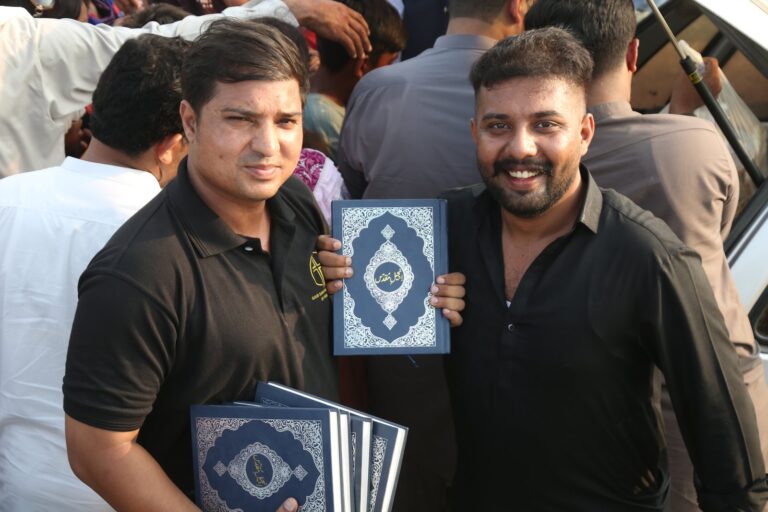
Free Urdu Bibles is the Bible distribution work of Good Samaritan Ministries Pakistan. We have given away over 150,000 Bibles across Pakistan since 2009, free of charge, and we love to see people reading whichever faithful translation helps them hear God speak.
Why are there different Urdu Bible versions?
Every translation has to make choices. Some translators stay as close as possible to the wording and order of the original Hebrew and Greek, even when the result sounds formal. Others aim to express the meaning in the natural, everyday speech of today’s readers. Both approaches are honest attempts to carry God’s Word faithfully into another language. Language also changes over time, so a translation that sounded ordinary two hundred years ago can sound formal and old-fashioned now.
The Urdu Bible has a long history, beginning with translators in the 1700s and 1800s. We tell that story in Who Translated the Bible into Urdu?
The main Urdu Bible translations you will meet
The Revised Urdu Bible (Kitab-e-Muqaddas)
This is the Urdu Bible most Urdu-speaking churches know. It descends from the New Testament of Henry Martyn and Mirza Fitrat, published in 1814, and from the many revisions that followed in the nineteenth and twentieth centuries. Its title, Kitab-e-Muqaddas, means “the Holy Book”.
Its language is dignified and traditional. Many of its words and phrases are woven into the prayers, sermons, songs and Scripture memory of Urdu-speaking Christians, so reading it helps a believer feel at home in church. Because its style is older, some younger readers find certain words harder to follow. Many readers keep it as their main Bible and use a modern translation or an English Bible alongside it when they want help with a difficult passage.
The Urdu Bible in Roman letters
For many years Urdu Bibles were also printed in Roman letters, for readers who speak Urdu well but do not read the Urdu script. This is not a separate translation but a different way of writing the same words. It can be a real help to Urdu speakers who grew up outside Pakistan, or to anyone still learning the script.
Modern Urdu translations
In recent years translations in modern, everyday Urdu have also appeared. Two that you may come across are the Urdu Geo Version, which describes itself as God’s Word in modern Urdu and is available in the Urdu script, in Roman letters and in Hindi script, and the Urdu Contemporary Version, a translation in present-day Urdu. Modern translations aim to read the way people speak and write today. Some readers find them easier for personal reading and for explaining the Bible to someone hearing it for the first time; others prefer to stay with the traditional church text. Both are reasonable choices.
How do I choose the best Urdu Bible translation for me?
Rather than asking which Urdu Bible version is “best”, ask what you need it for. Here is a simple guide:
- For worship and church life: read the same Urdu Bible your church uses. You will follow the readings, recognise the verses in sermons and songs, and memorise the words your fellowship shares.
- For careful study: read your main Bible slowly, and compare a difficult verse in a second translation, Urdu or English. When two faithful translations put a verse differently, each often helps you see something the other does not.
- For a first-time reader: begin with a Gospel. A New Testament or the Gospel of John is an excellent place to start, whichever translation it is in. See Urdu New Testament: Free Copies for Seekers and New Believers.
- For children: a children’s Bible, with pictures and simpler language, is the best first step. See A Children’s Bible in Urdu.
- For readers of two languages: read Urdu and English together. Our article The Bible in Urdu and English, Side by Side shows how.
Questions to ask about any Urdu Bible version
- Does it contain the whole Bible, or only the New Testament or some books?
- Can I understand it when I read it aloud to my family?
- Is it the Bible my church reads, or will I use it alongside that Bible?
- Is it in a script I read comfortably: Urdu, or Roman letters?
- Do I know who prepared it, so that I can trust its source?
“Now these were more noble than those in Thessalonica, in that they received the word with all readiness of mind, examining the Scriptures daily to see whether these things were so.” Acts 17:11 (World English Bible)
Which Urdu Bible do you give, and which is in the app?
Our Request a Free Urdu Bible page offers four editions, all free of charge: the Complete Urdu Bible (Old and New Testament), the Children’s Urdu Bible, the Urdu New Testament (Injeel) and the Gospel of John. If you have a question about a particular edition, write it in the request form; every request is read by a person, and our team contacts you on WhatsApp. We deliver anywhere in Pakistan, and only within Pakistan.
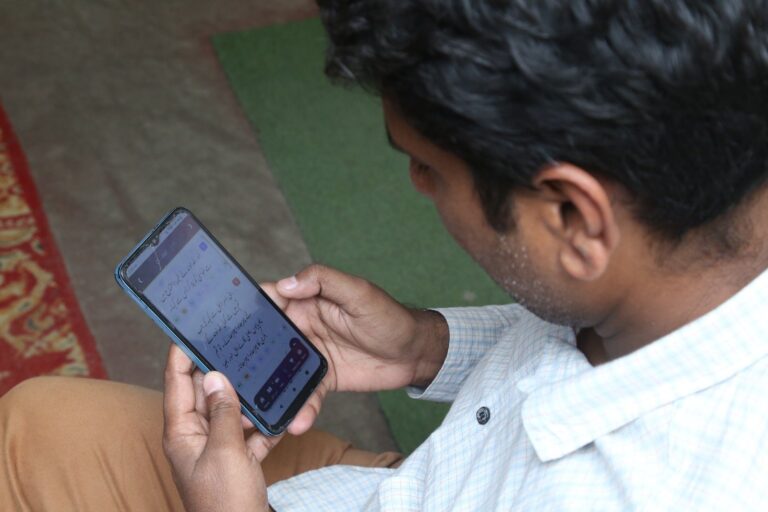
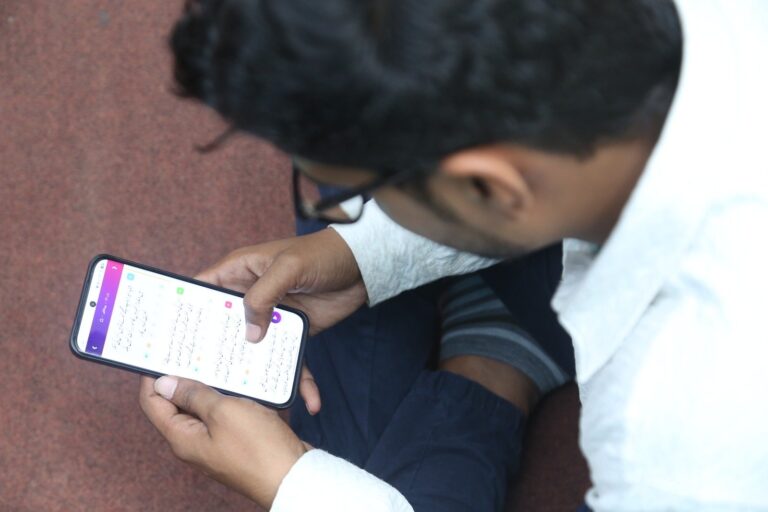
For reading on a phone, the free Urdu Church app carries the complete Urdu Bible in what its website calls the most trusted Urdu translation, with English Bibles in multiple translations alongside the Urdu text. It works offline once downloaded, and it is free, with no subscription and no advertising. You can get it from www.urduchurch.com/download.
The translation you read is better than the one you leave closed
Discussions about translations can become arguments. They need not. The greatest danger is not choosing the “wrong” faithful translation; it is never reading God’s Word at all. Choose a Bible you can understand, read it every day, and ask the Holy Spirit to teach you.
“Sanctify them in your truth. Your word is truth.” John 17:17 (World English Bible)
The Free Urdu Bibles story began in 2009 with five Urdu Bibles, and our prayer is one million free Urdu Bibles by 2033. You can read more about why in The Vision Behind Free Urdu Bibles. If your home has no Bible, ask for a free copy today, and please pray for every new reader in Pakistan.
A note on fairness: we describe Urdu translations by what they are and how they were made, not by taste. We have named only translations whose details we could check in more than one source, and we do not reproduce Urdu Bible text, which belongs to its publishers.