Who translated the Bible into Urdu? The short answer is that no single person did it alone. The Urdu Bible was the work of more than a century: an early pioneer in South India, an English chaplain named Henry Martyn and his Urdu-speaking colleague Mirza Fitrat, and a long line of revisers who polished the text after them. This article tells that story using only facts we could check in recognised historical sources.
At Free Urdu Bibles, the Bible distribution work of Good Samaritan Ministries Pakistan, we give Urdu Bibles away free of charge. Knowing how the Urdu Bible came to be helps us thank God for those who laboured before us.
What was Urdu called when the Bible was first translated?
In older records the language is often called Hindustani rather than Urdu. Historians of Bible translation explain that Urdu, Hindi and Hindustani are names for what is, at heart, one spoken language, written in two different scripts. The early manuscripts of Martyn’s New Testament, for example, are catalogued as a “New Testament in Hindoostanee”. So when you read old accounts of the “Hindustani” Bible, they are describing the Urdu Bible’s earliest history.
The first steps: Benjamin Schultze in South India
The earliest serious work on the Bible in Urdu was done in the first half of the 1700s by Benjamin Schultze, a missionary of the Danish mission in South India. He worked on the New Testament in Dakhini, the southern form of Urdu, and also on parts of the Old Testament, including Genesis. Sources differ on the exact years, so we will not give a precise date. What they agree on is that Schultze was a pioneer, and that a fuller and more lasting translation was still to come.
Who translated the Bible into Urdu? Henry Martyn and Mirza Fitrat
The name most closely tied to the Urdu Bible is Henry Martyn (1781 to 1812), an English clergyman who came to India in 1806 as a chaplain. Alongside his duties he gave himself to the study of Urdu and to translating the New Testament. Library records and later histories name his chief Urdu colleague as Mirza Fitrat, who helped to shape the language of the translation.
Martyn’s Urdu New Testament was printed at Serampore, near Calcutta, and published in 1814. By then Martyn had already died. He left India in poor health to work on his Persian translation and died at Tokat in 1812, aged about thirty-one. He never saw his Urdu New Testament in print, yet it became the foundation on which the Urdu Bible was built.
Historians still speak of Martyn’s translation as the root of the Urdu Bible used today. One recent study describes it as the translation that, with revisions, is still in use in Pakistan and among Urdu-speaking churches abroad. A history of the Urdu New Testament written in 1900 already said that the text, even after revision, still bore witness to Martyn’s handiwork.
How was the Old Testament translated into Urdu?
Martyn did not live to complete the whole Bible. His drafts of Old Testament books, prepared with Mirza Fitrat, were taken up by others. A library record of an incomplete Old Testament printed in 1822 lists the translators as Henry Martyn and Mirza Fitrat, with revision by Thomas Thomason. Later histories describe the complete Urdu Old Testament as resting largely on Martyn’s drafts, with Thomason among those who carried the work forward.
By the middle of the 1840s the whole Bible was available in Urdu. Our sources give 1843 or 1844 for this milestone, so we will simply say the mid-1840s. For the first time, Urdu-speaking believers could read the entire Scriptures, from Genesis to Revelation, in their own language.
The revisers who followed
A translation is never really finished. Language changes, scholarship grows, and printing errors creep in. Through the 1800s, committees and individual scholars revised the Urdu text again and again. One of the most important revisions was made by Robert Cotton Mather, who worked over the text and published a new edition at Mirzapur in 1870. Over the years Urdu Bibles were printed both in the Urdu script and in Roman letters, so that readers who did not read the Urdu script could still read the Bible in Urdu.
Revision continued into the twentieth century. The Urdu Bible read in churches today is often called the Revised Urdu Bible, and its Urdu title, Kitab-e-Muqaddas, simply means “the Holy Book”. The text has been reprinted and lightly revised over the years. Through all these editions the line from Martyn and Fitrat remains clear.
Are there newer Urdu translations?
Yes. In recent years new translations in modern, everyday Urdu have also appeared. We describe them fairly in our companion article, Which Urdu Bible Translation Should I Read?
What this story means for us
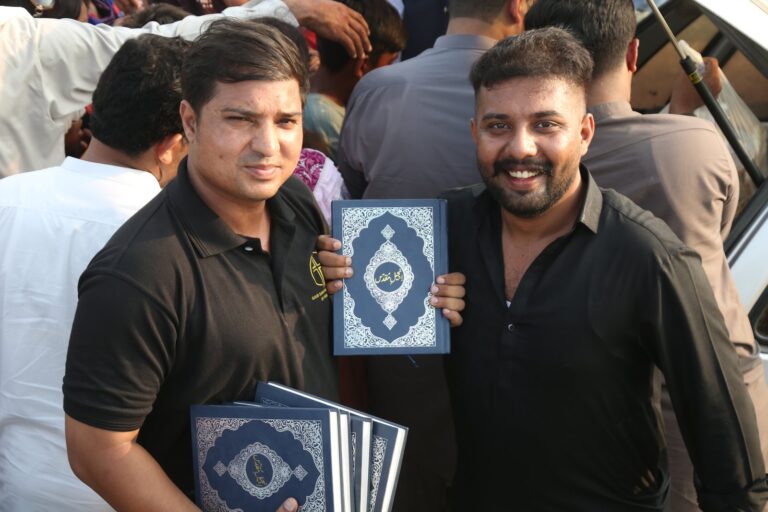
When our team hands a free Urdu Bible to a family in a village, that Bible carries the prayers and labour of people who lived two centuries ago. Martyn worked far from home and died young. Mirza Fitrat lent his gift for language. Revisers carried the work on after them. None of them could have imagined a Bible on a phone, or a ministry in Pakistan that would give away over 150,000 Bibles free of charge. Yet God used their faithfulness.
“so is my word that goes out of my mouth: it will not return to me void, but it will accomplish that which I please, and it will prosper in the thing I sent it to do.” Isaiah 55:11 (World English Bible)
The Free Urdu Bibles story began in 2009 with just five Urdu Bibles given to five people. You can read it in Our Journey of Faith: How the Free Urdu Bible Mission Began in 2009 and in The Life-Changing Story of Rev. Dr. Naeem Nasir and His Vow to Serve God. Our vision is one million free Urdu Bibles by 2033.
Read the Urdu Bible today
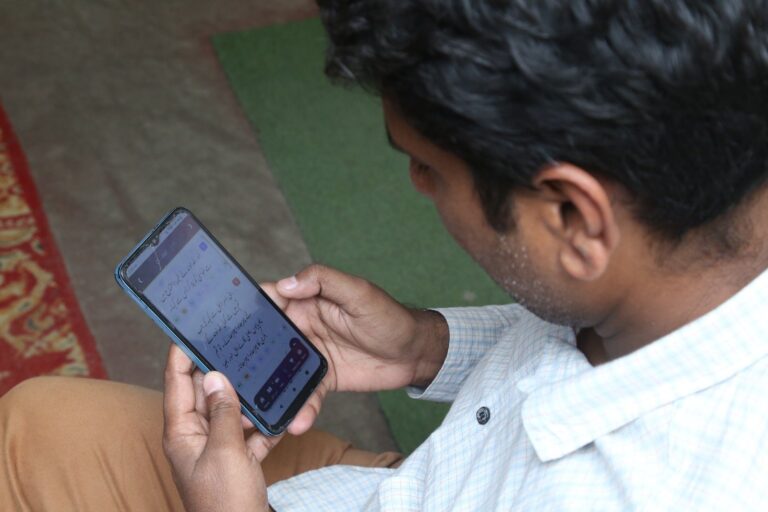
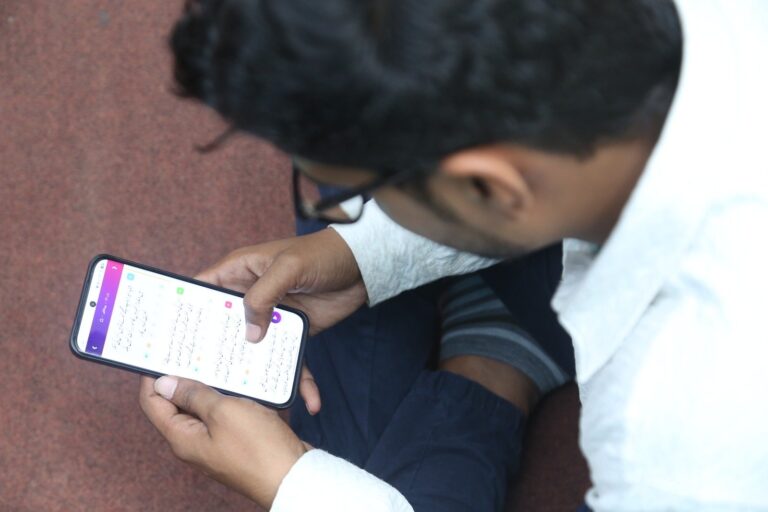
The best way to honour those who translated the Bible into Urdu is to read it. You can read the complete Urdu Bible free in the Urdu Church app (download it from www.urduchurch.com/download), and if you live in Pakistan you can request a free printed Urdu Bible. Please pray with us that the Word, so carefully translated, would be read and loved in every home in Pakistan.
A note on sources: the names and dates in this article come from historical records that we checked in more than one place, including a university library’s Bible archive catalogue, a published history of the Urdu New Testament (1900), a biographical dictionary of Christian missions and other studies of Bible translation in South Asia. Where those sources disagree, we have said less rather than guess.